Design Goals
HardDriverz is a single-player arcade racing game. My key goals as the lead game designer were to create a set of two systems, customizable kart stats and elemental track effects, that interact with each other during gameplay. I hoped to create a competitive and high-tension gameplay experience, where players feel like their choices both before and during the race matter and affect the outcome.
Game Info
Software: Unreal Engine 5
Team Size: 54 team members
Development Time: 4 months
Platform: PC (Steam)
Platform: Steam / PC (Controller Compatible)
Role: Lead Game / Systems Designer
Core Game Pillars
Customizable Kart-Racing Gameplay
Fun, Competitive Classic Kart-Racing Gameplay Systems
'Retro-Techno' Visuals & Theming
Collaboration, Leadership, & Iteration
Customizable Kart-Racing Gameplay
Kart Attributes System
I created a Kart Attributes System in HardDriverz that allows players to customize their gameplay experience:
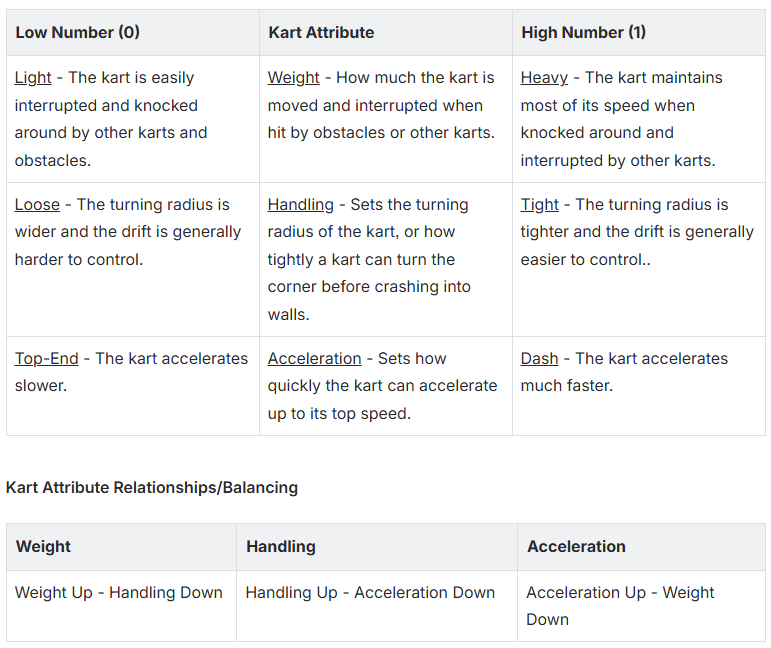
Each Kart holds 3 different attributes: Acceleration, Weight, and Handling.
Acceleration: Controls how fast a player gets to top speed
Weight: Controls how much a player is affected by kart-to-kart interactions (i.e., Kart bumps & crashes)
Handling: Controls how tightly the player can turn
I designed an initial Kart Attribute Relationship chart that showed how raising or lowering one attribute should affect the others, so no player could have all maximum or minimum values on their kart attributes.
The Kart Attribute system was created to be simple to understand at a glance, but deep enough to intrigue the player to experiment with different attribute combinations.
Modular Part System
I created a Modular Part System for the Karts in HardDriverz as a way for players to interact with and change their Kart Attributes:
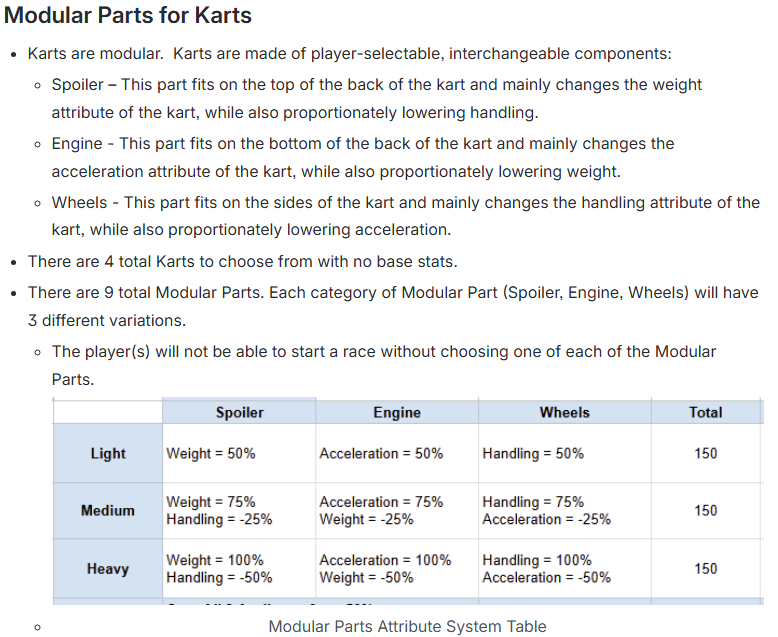
Each Kart holds 3 different parts: Spoiler, Engine, Wheels.
Each part is also associated with two of three different stats for each Kart: Acceleration, Weight, and Handling.
The player can customize each part of the kart to be heavy, medium, or light.
By customizing the parts, the player is also customizing how their kart plays through its stats.
A key aspect of HardDriverz' core game design is customizability, allowing players to play the way they want.
In focusing on customizability, the Modular Part System also allowed the player to customize the look of their kart.
Below are some images of the balancing charts I created for these game systems.
-
![]()
Kart Attribute Descriptions & Kart Attribute Relationship Chart
-
![]()
Initial Kart Parts & Stat Balancing
-
![]()
Kart Modular Part Selection Screen (In-Game)

Fun, Competitive Classic Kart-Racing Gameplay Systems
Terrain Islands Balancing
Terrain Islands are a feature on every track that helps each track feel distinct in both aesthetics and gameplay.
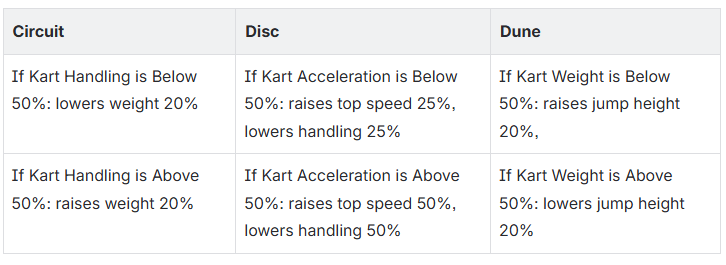
There are three different types of terrain islands: Circuit, Disc, and Dune.
I designed each terrain island to have a distinct gameplay feel and take advantage of certain attributes within the Kart parts, so players could feel the game felt balanced for many different Kart combinations.
The islands are designed as more open areas on the tracks to introduce both visual flair, as well as, introducing a new element into the pacing of each track so that players aren’t just driving on straight tracks the whole time.
Obstacles & Anti-Gravity
Obstacles were designed to break up pacing in the tracks and create a sense of challenge in the levels, where players would have to utilize both their strategies and interesting Kart parts to overcome other racers.
We implemented an anti-gravity system into the game to create more interesting shapes with the tracks and make each race feel more invigorating, both visually and in gameplay.
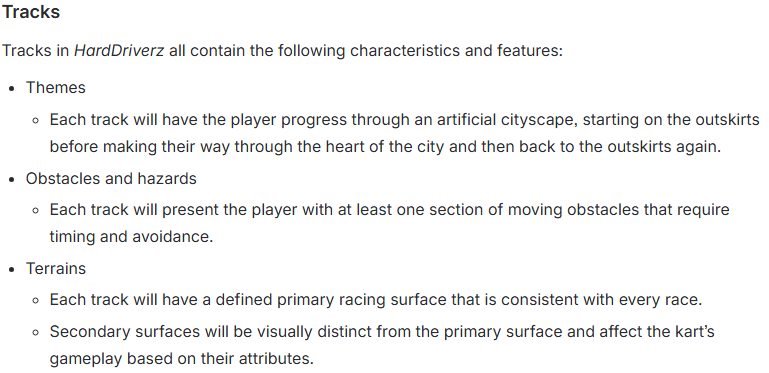
Below are some images of the balancing charts & design guidelines I created for the terrain islands.
Kart Feel & Speed
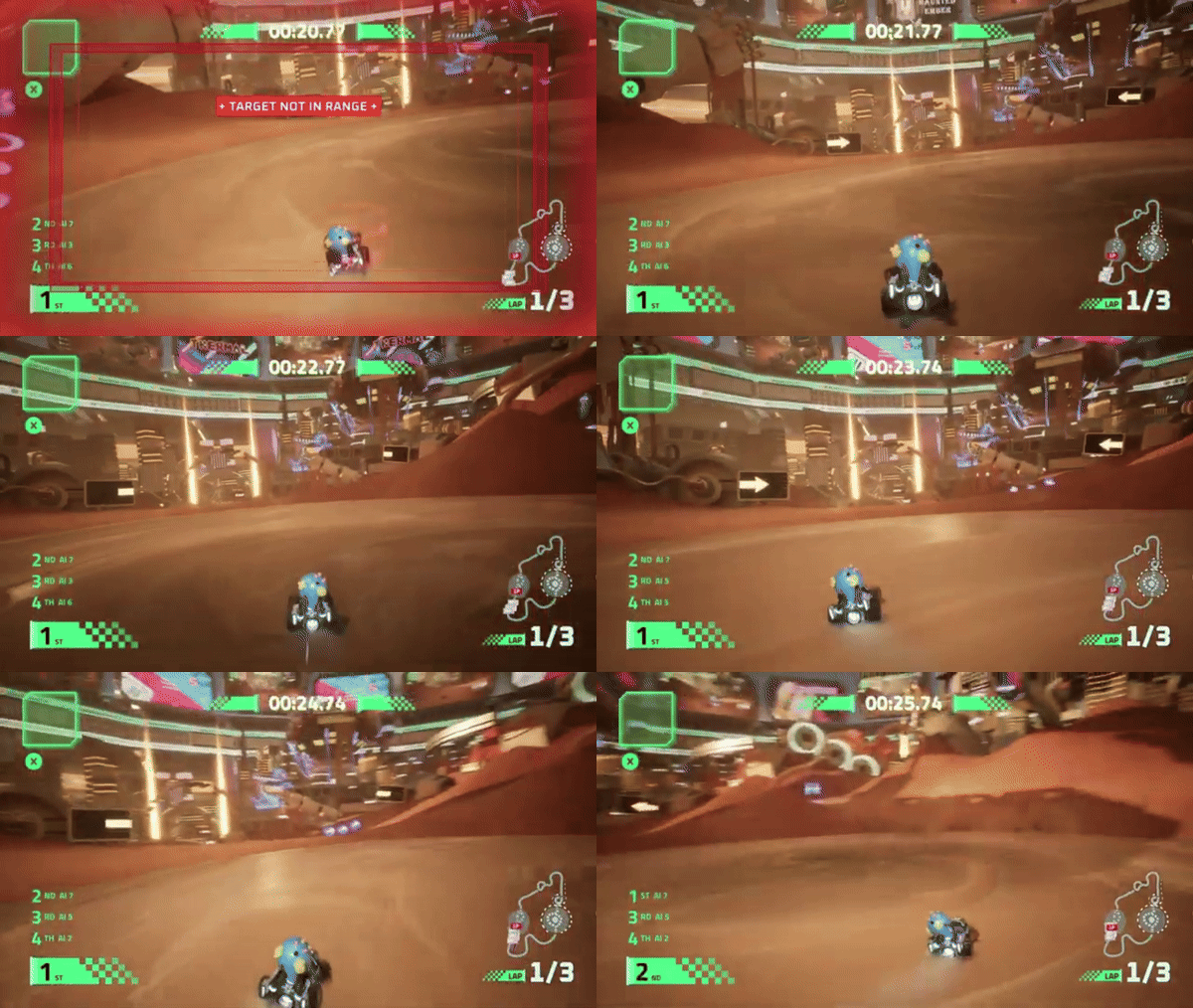
From the beginning, I told the team that my biggest goal in designing an arcade racer was to make the player feel fast.
In doing so, I worked extensively with the kart engineer to create a smooth and fast feel for the kart.
We had to balance actual kart speed with augmented speed created by SFX and VFX to create a gameplay experience where the player feels like they’re speeding around the track.
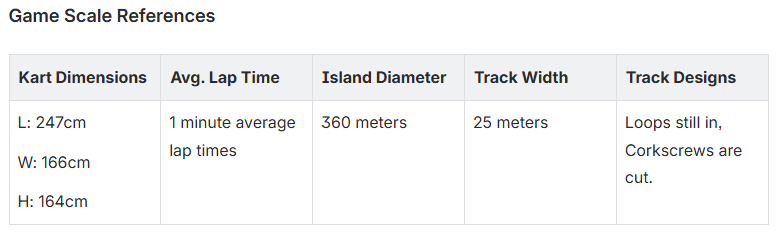
We had to adjust the speed of the kart to avoid tracks either getting too big in scale or becoming too short in playthrough time.
-
![]()
Terrain Island Status Effects on Kart Attributes
-
![]()
Sand Trap Obstacle on Dune Terrain Island
-
![]()
Initial Track Design Guidelines & Design Goals
-
![]()
Dune Terrain Island (In-Game)
-
![]()
Kart & Track Scale References

'Retro-Techno' Visuals & Theming
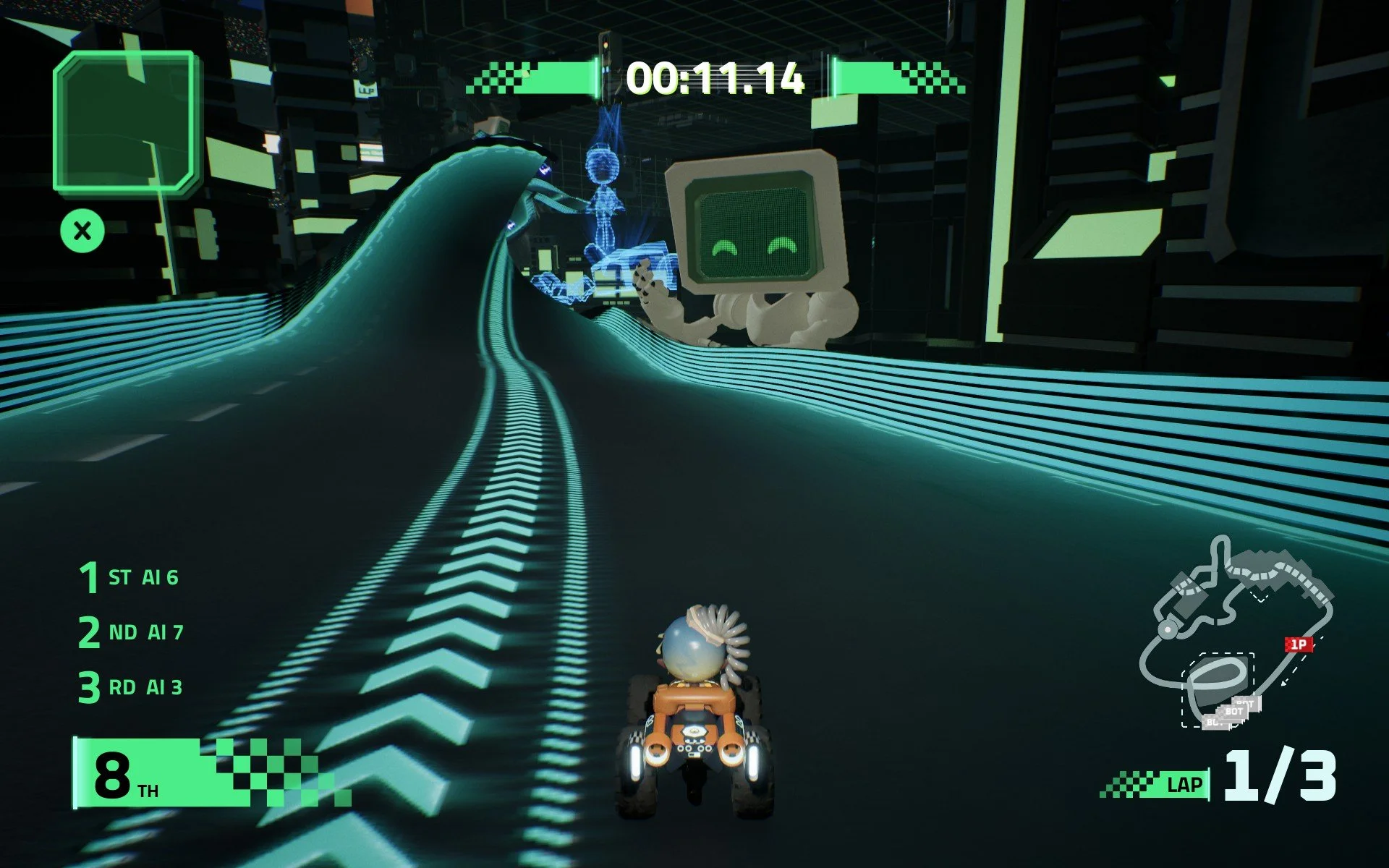
'Retro-Techno' Inspired Visuals
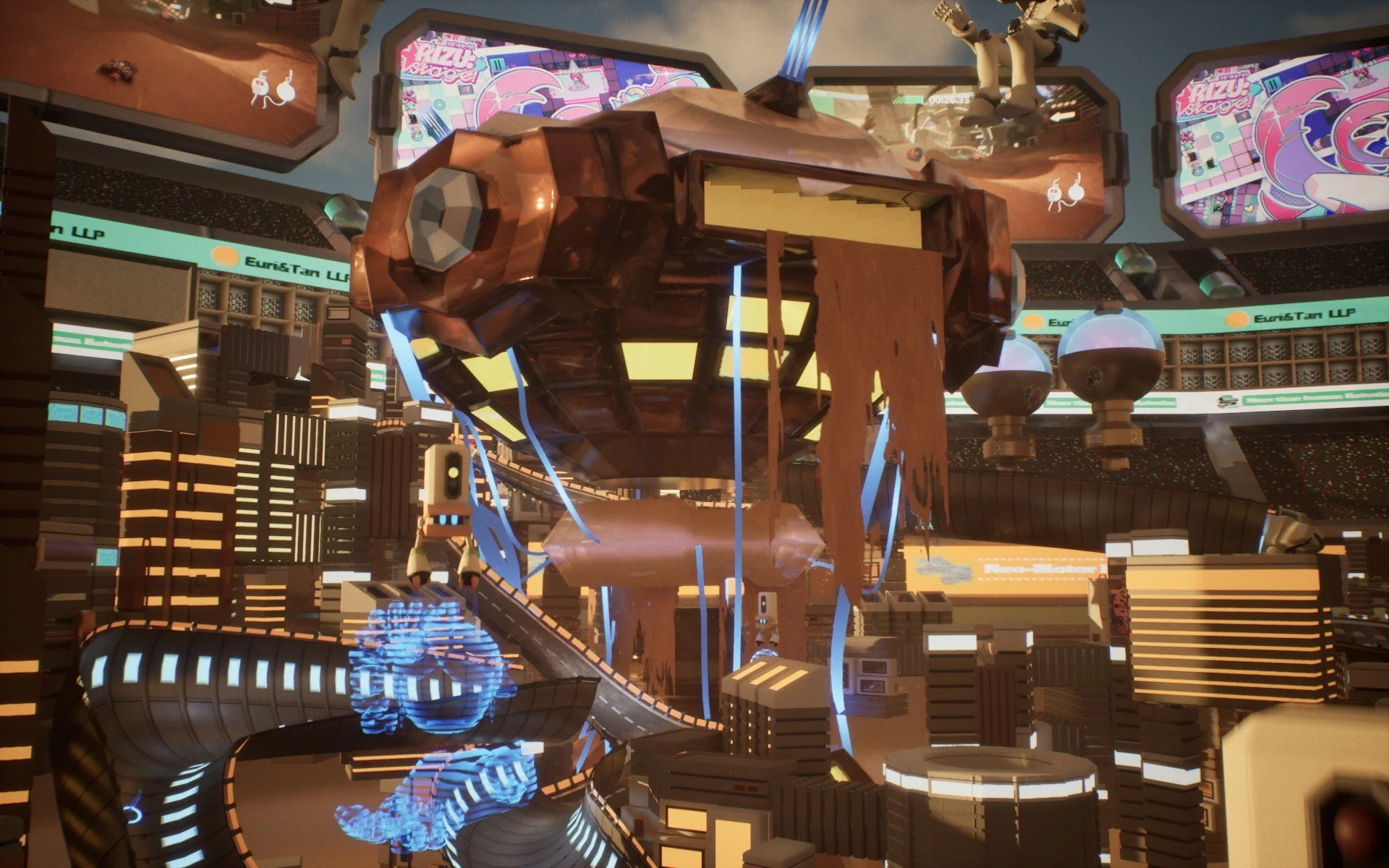
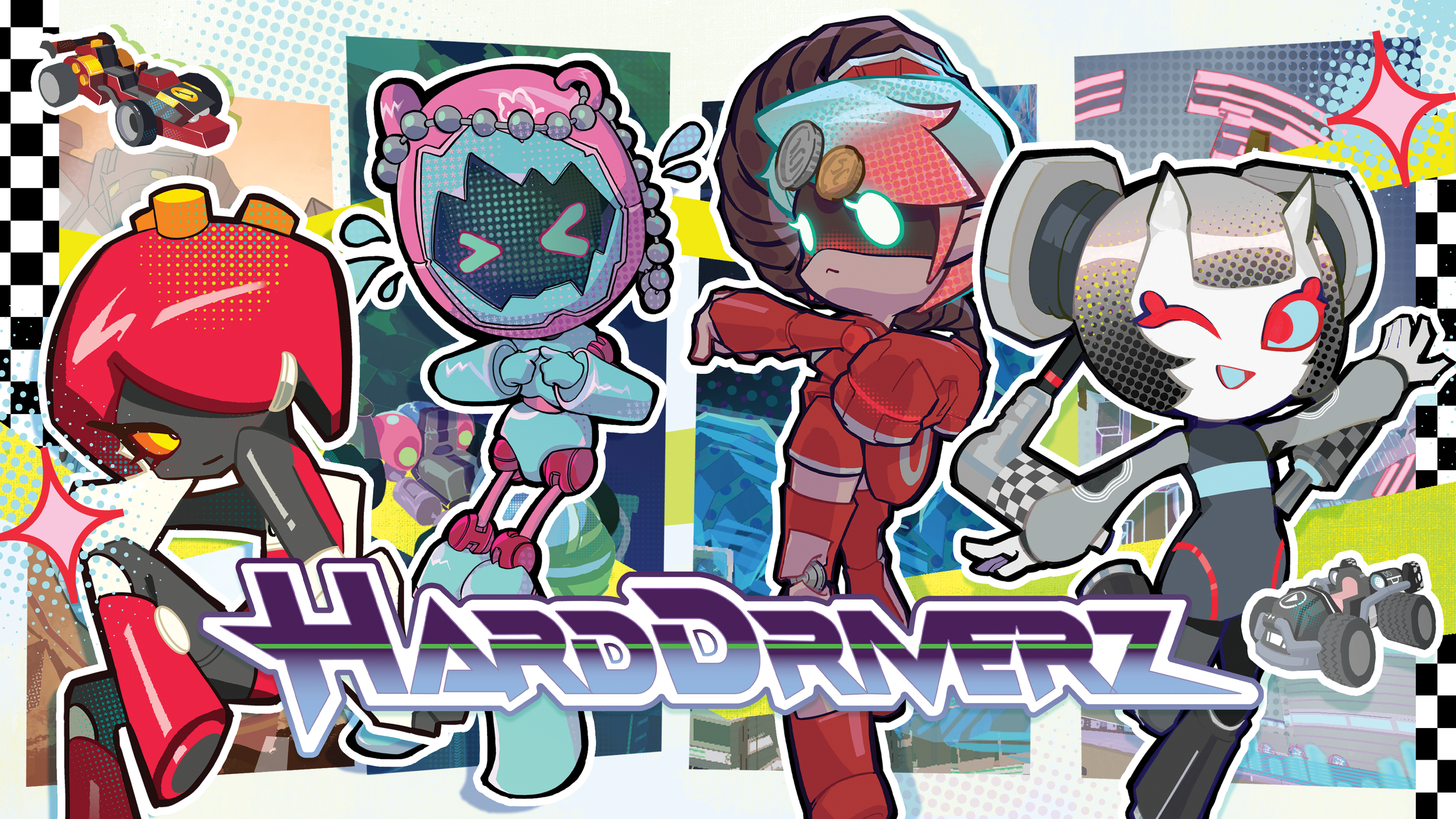
Collaborating with the Lead Artist on this project, we created a visual style for HardDriverz that harkens back to 1950s and ‘60s visualization of a technological future, featuring androids and neon lights.
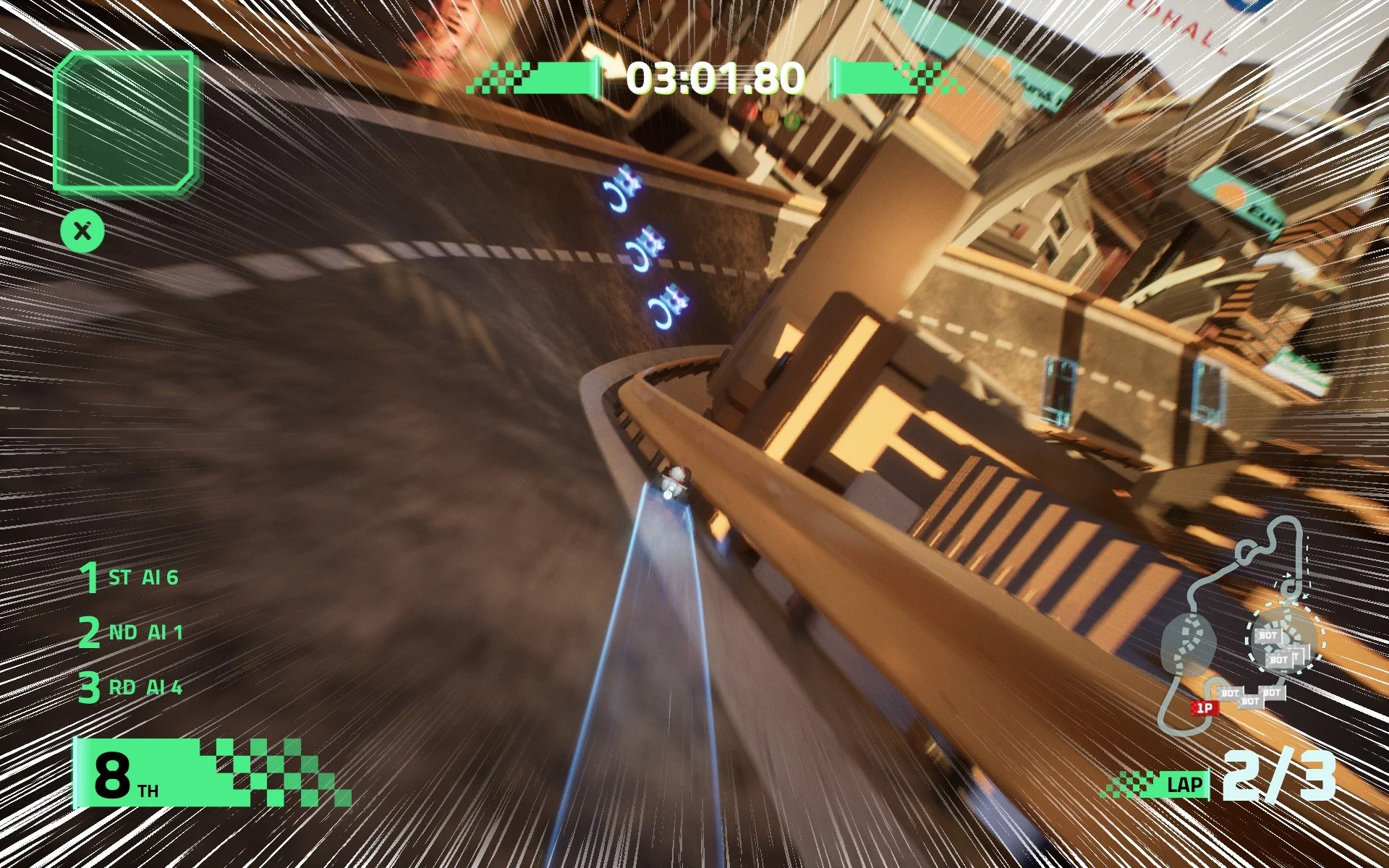
Below are some in-game examples of the ‘Retro-Techno‘ art direction we decided on.
-
![]()
In-Game Screenshot
-
![]()
In-Game Screenshot
-
![]()
Game Poster By Lead Artist
Collaboration, Leadership, & Iteration
Working with the Team and Stakeholders
Worked with the other Leads on my team to establish a stable and reliable vision for the team to work towards
Worked with the Lead Level Designer to establish rules for Track Design and review Track iterations together
Worked with the Lead Artist to create an art direction that harmonized well with the gameplay feel and mechanics
Worked with the Lead Programmer to solve major bugs and establish the technical scope of the project based on prominent gameplay features
Collaborated with many different team members to give personalized feedback and actively work towards the overall game vision
Communicated actively with stakeholders to update them on the project progress while listening for feedback and iterating the project based on their feedback
pOSTMORTEM
What Went Well?
Team Communication and Organization
Overall, I felt that the team and I had consistent and productive communication, relaying important information promptly. I also felt that the other leads, producers, and I established a solid, organized form of communication so that no member of the team ever felt overwhelmed. It also allowed me to allocate some of my smaller tasks to other team members so that I could optimize my work time to be as productive as possible.
Team Buy-In and Trust
From early on, the team and I were able to establish a strong trust in each other and a clear understanding of the core design goals and principles I wanted to establish for the project. This led to clear communication in most situations as we all knew what goal we were trying to head toward.
Design to Execution Consistency
From early designs and brainstorms to the final product, the game was able to maintain a consistent identity and feel. This was due to clear line communication between me and the rest of the team on what I wanted out of the game, and more importantly, the player experience and gameplay.
What Went Wrong?
Handling Problems from a More Personalized Perspective
In the process of developing this game, we ran across a big issue with the UI that persisted throughout development. As a first-time team lead, I felt that I addressed this issue through the wrong lens. I kept only seeing the issue as a task for someone to complete and never sat down to ask the UI team personally what the issue was. This lack of understanding of both the real UI issue at hand and what the UI team was going through led to a lot of miscommunication and difficulty, as the leads and the UI team were never able to see eye to eye and kept misunderstanding each other. If I had sat down with the UI team earlier on and asked them to explain the UI issues in detail, I’m confident that those issues would have been resolved much faster with much less miscommunication and stress.
Examining and Addressing Pipeline Issues
In the case of one particular misunderstanding between leads and the UI team during development, it created a pipeline issue that caused a block in the UI team’s productivity. Eventually, this issue got solved, but the issue should have been examined earlier and much more thoroughly to avoid blocking productivity on the team for a prolonged time.
Even Better If…
Defining Game Pillars Earlier
When starting development on the project, I had a lot of team members report that they were still confused on the overall concept and design goals of the game. While my Game Design Document was able to outline and answer these questions, the lack of solid core game pillars still confused the stakeholders. If I had created and implemented my core game pillars earlier, then I could have saved both my team members and stakeholders from confusion and gotten the team more focused feedback on how the project was moving along, closer to the overall game vision that I had planned.
Multiplayer Support
Multiplayer Support is a feature in the game that was not able to be completed in time before the launch of our game. If I was able to do a project like this again, I would be much more thorough on the process of implementing multiplayer to ensure it's inclusion.
Smoother UI Pipeline and Execution
With UI having pipeline and production issues throughout development, I would like to address UI much more intensively early on in the next project I could lead. UI is a vital part of any game and should be prioritised as such during development.
GAME GALLERY




PRODUCTION GALLERY
-
![]()
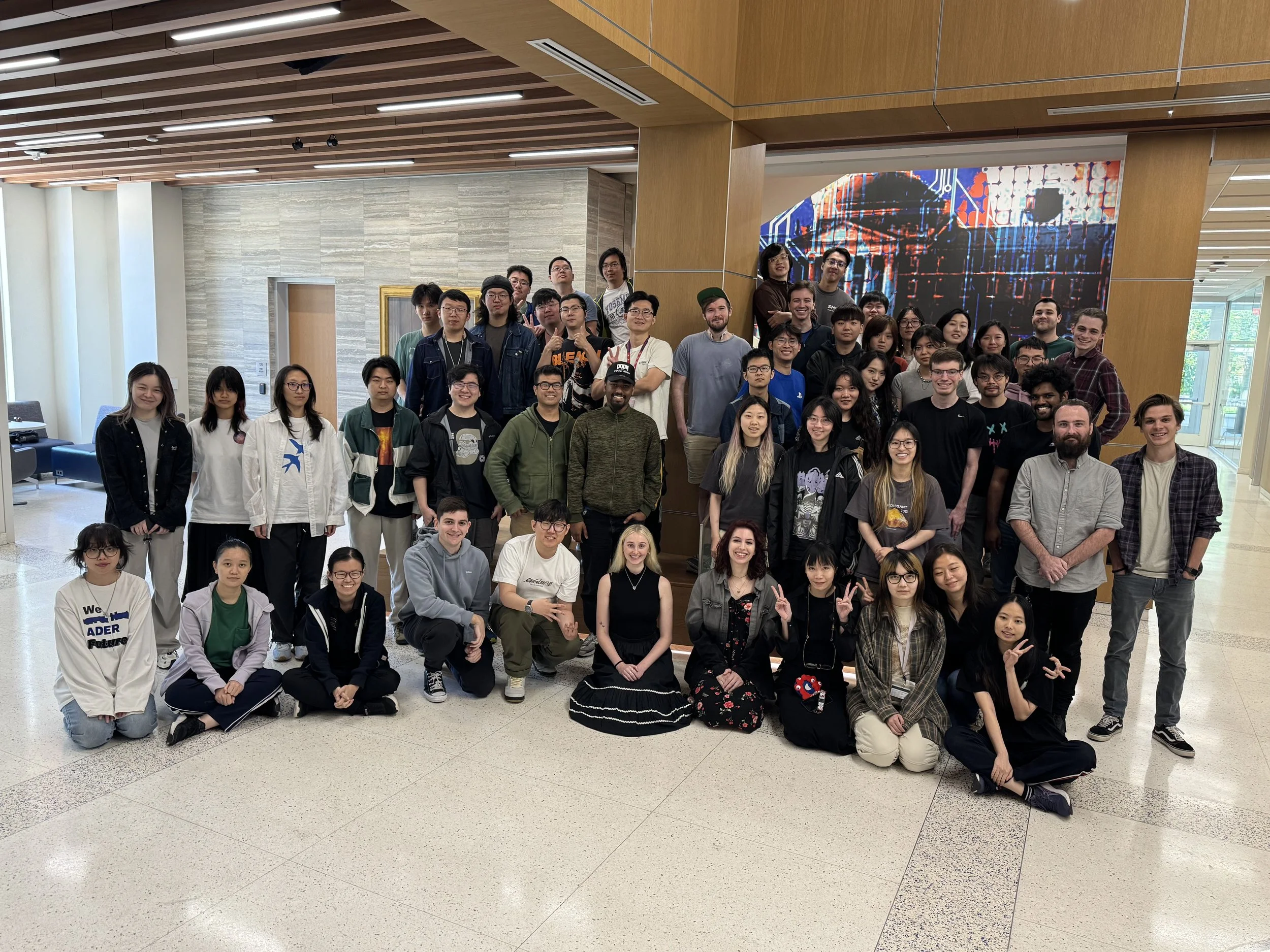
Team Photo
-
![]()
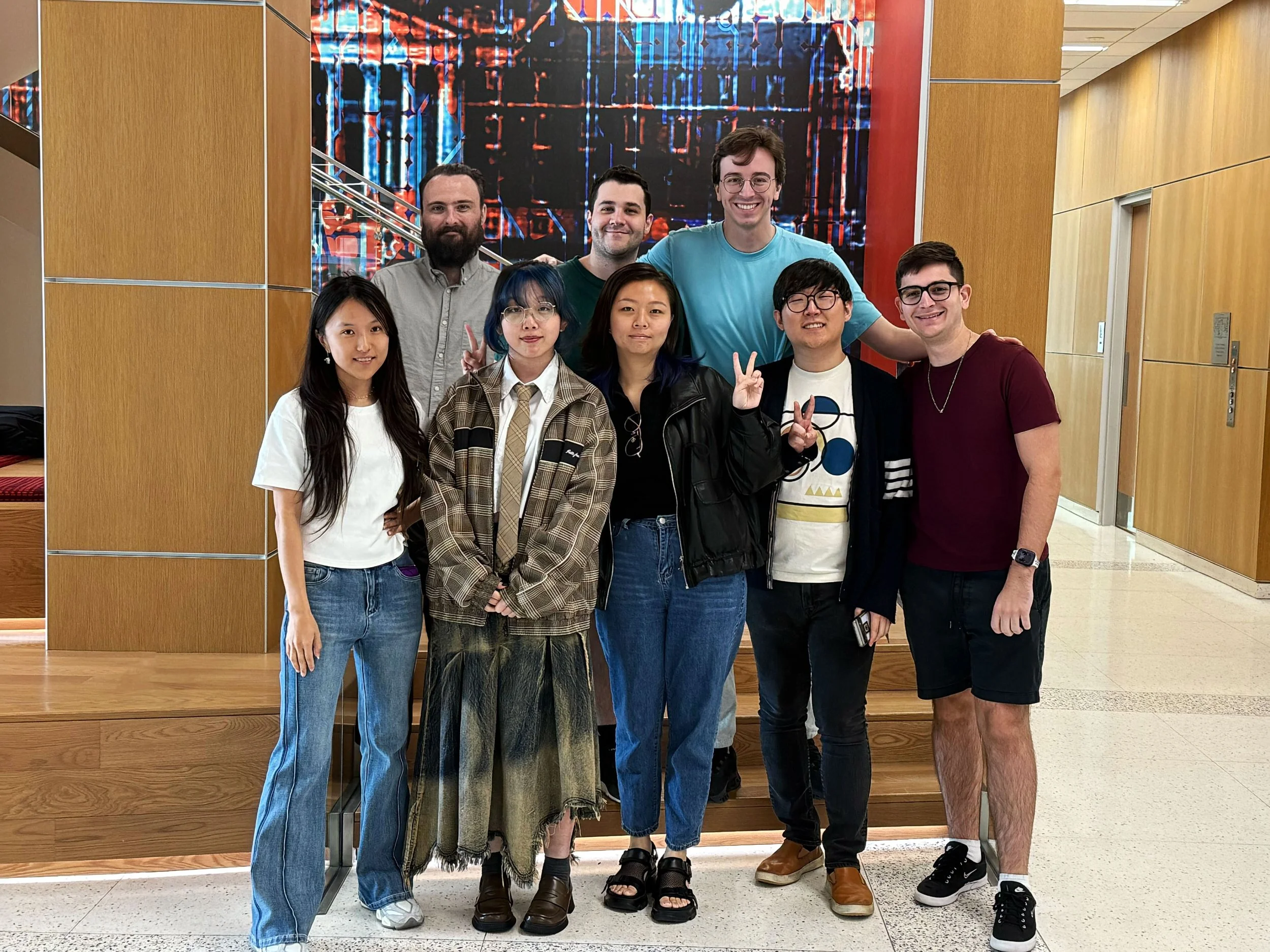
Lead Team for HardDriverz
-
![]()
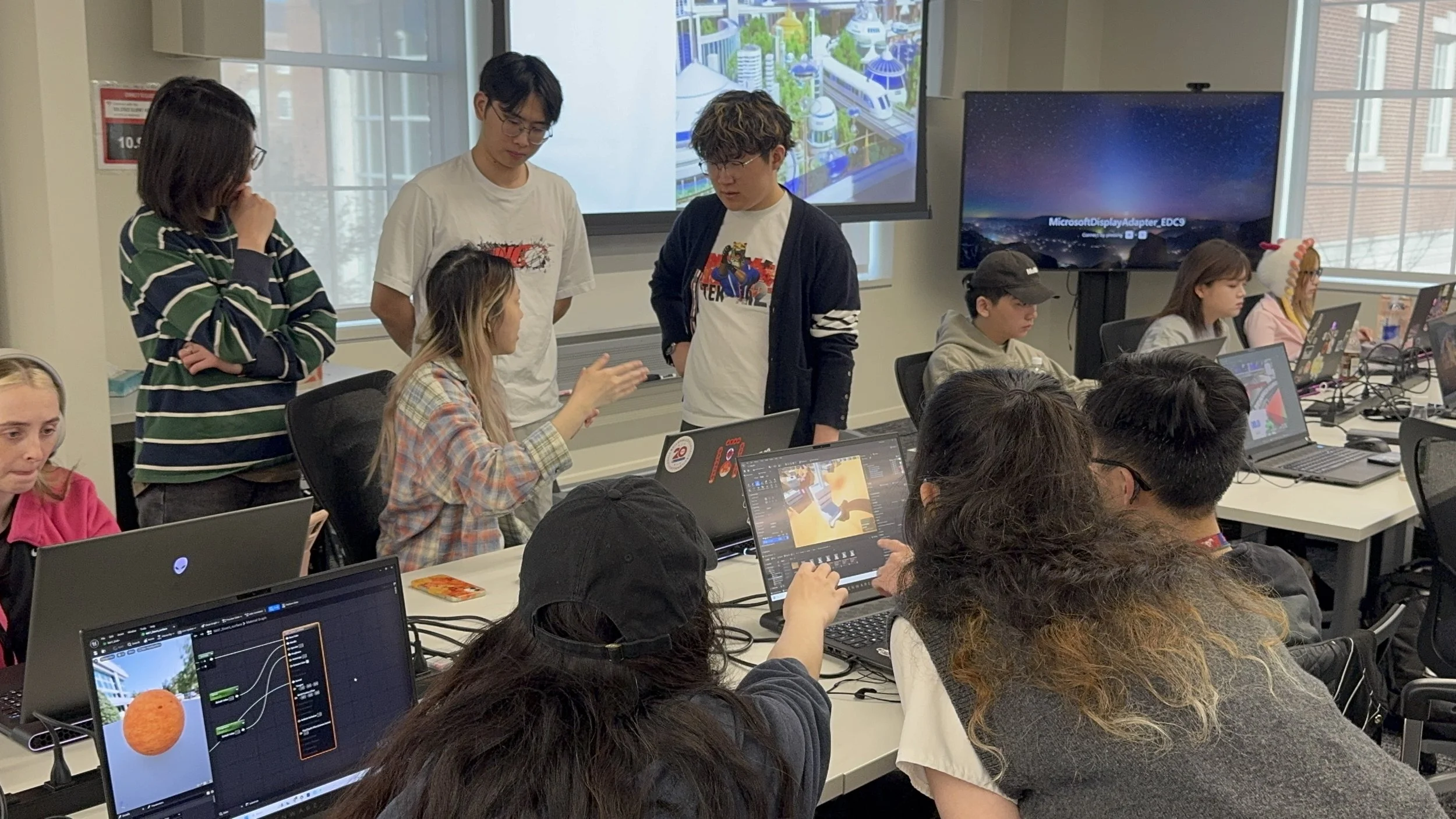
Working with Track Designers
-
![]()
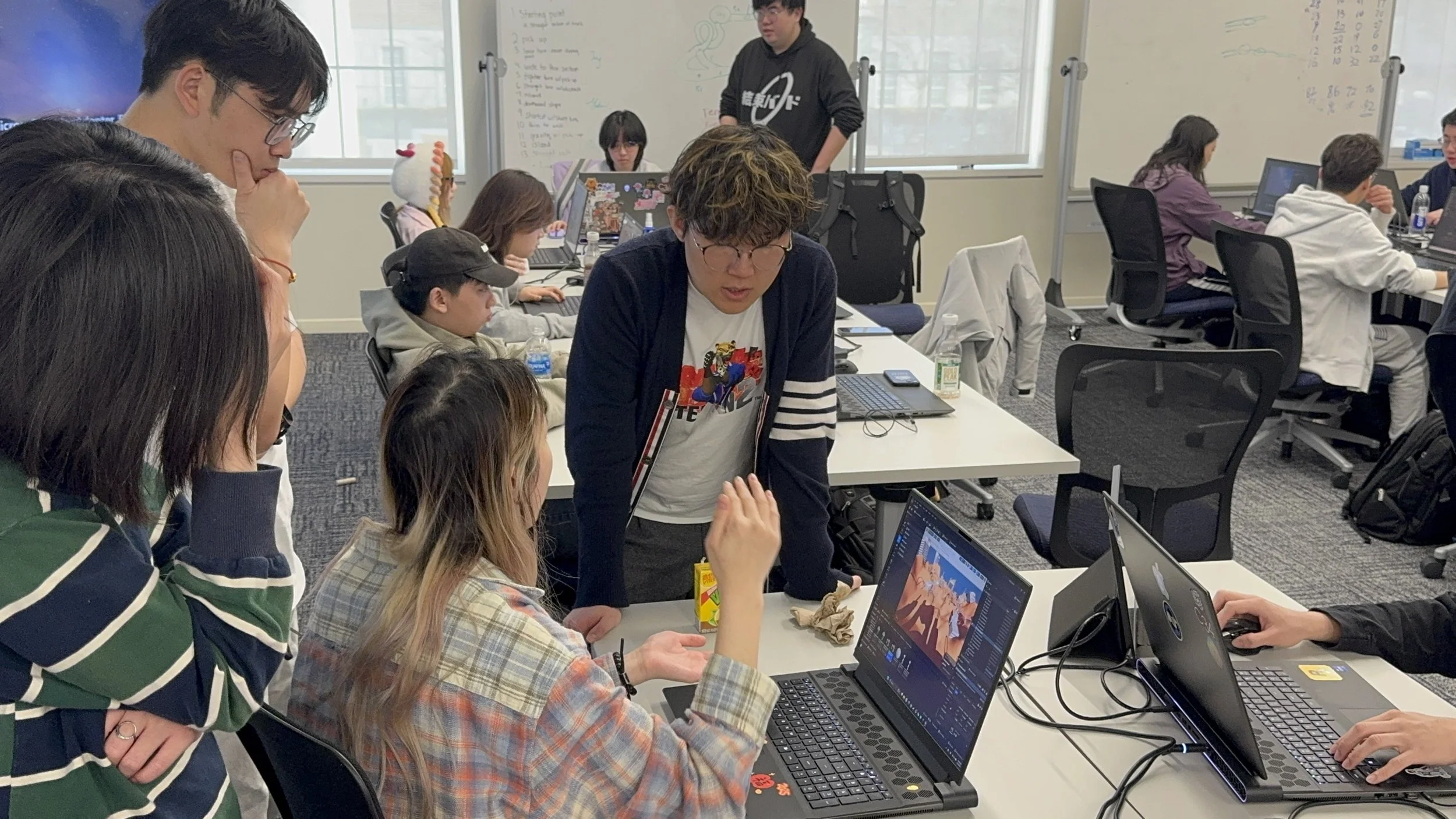
Track Level Design Discussions
-
![]()
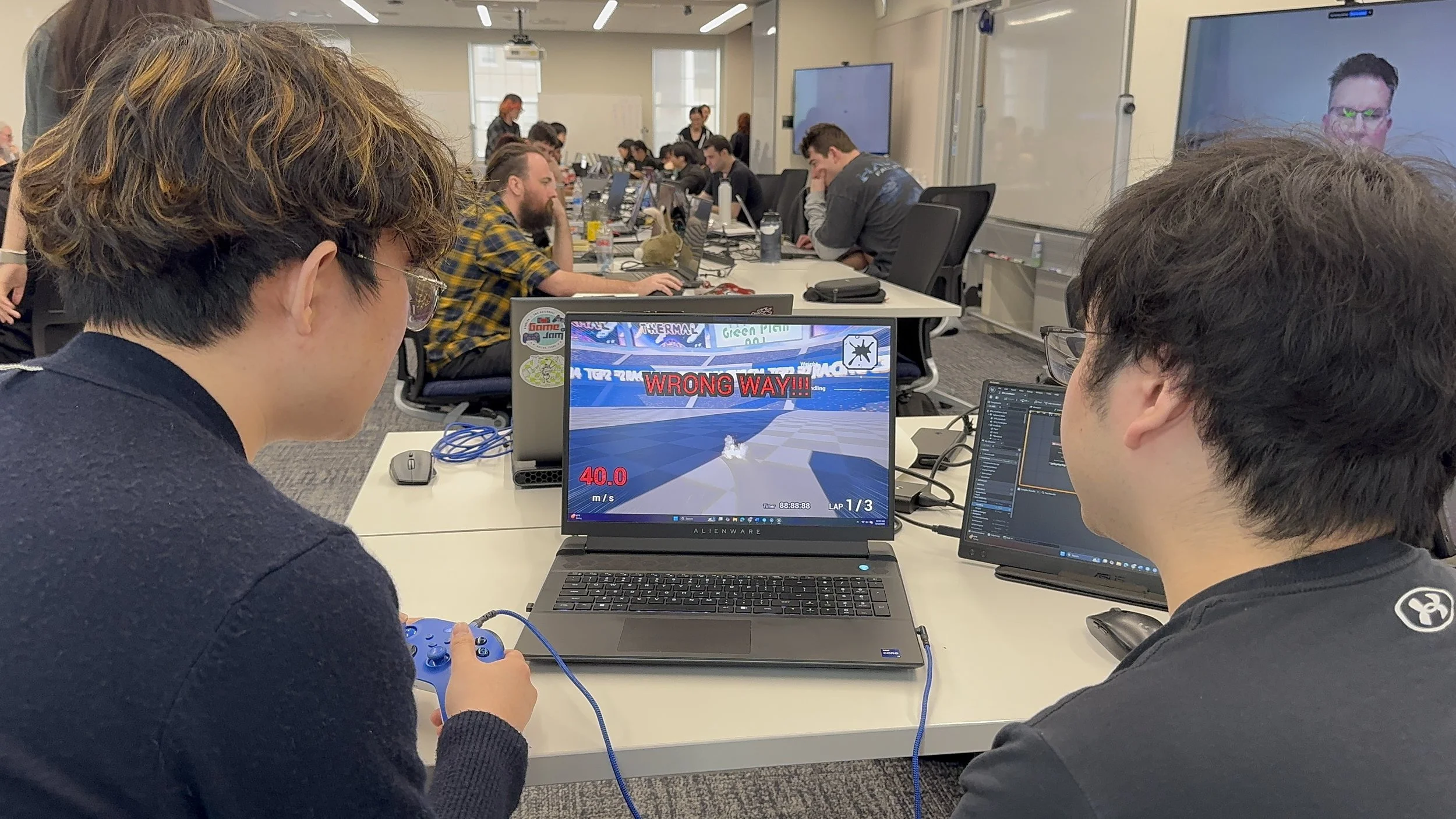
Testing Kart Physics with the Kart System Programmer Caleb Won
-
![]()
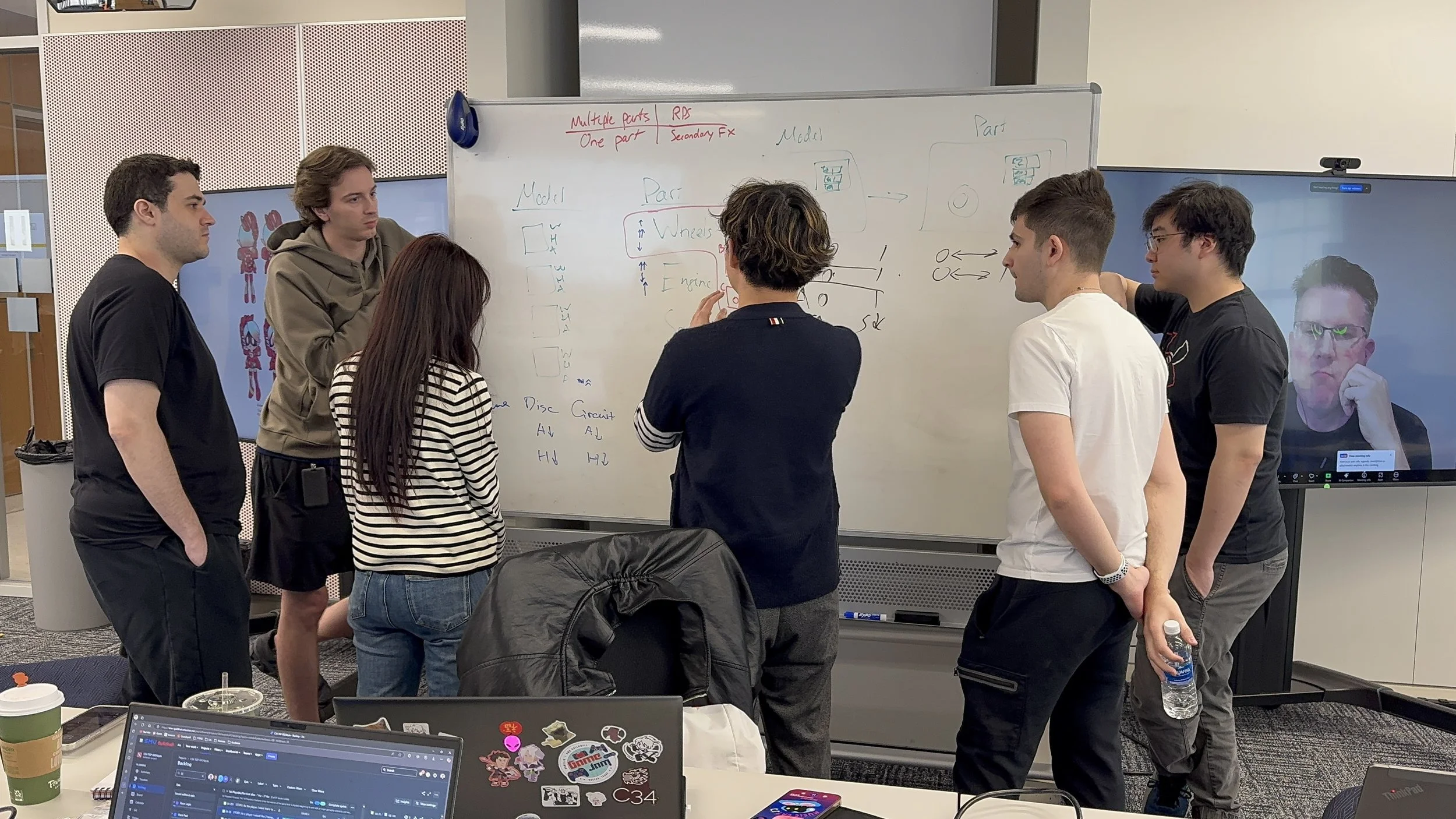
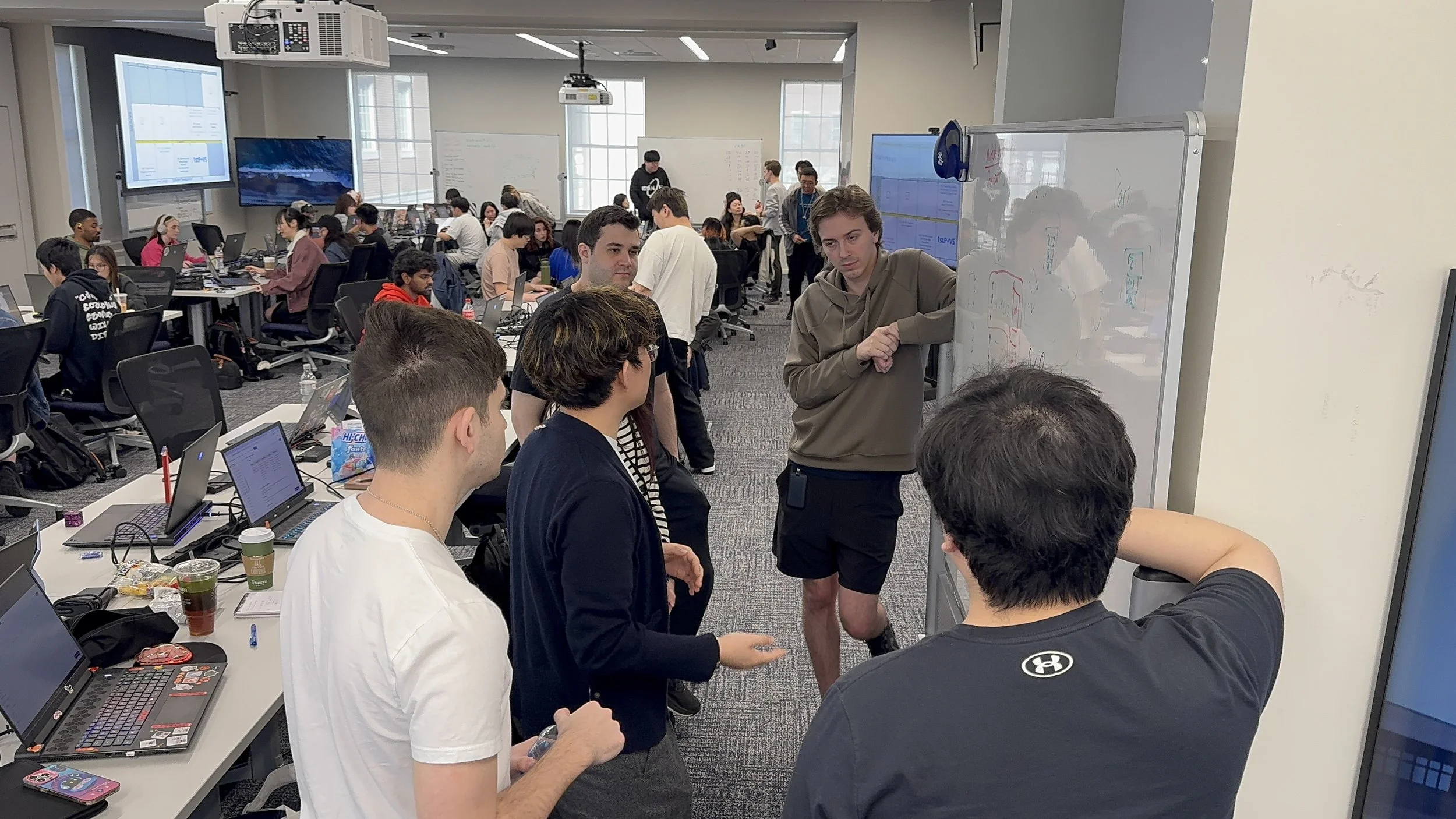
Design Meeting for Modular Parts System Balancing
-
![]()
Design Meeting for Modular Parts System Balancing
-
![]()
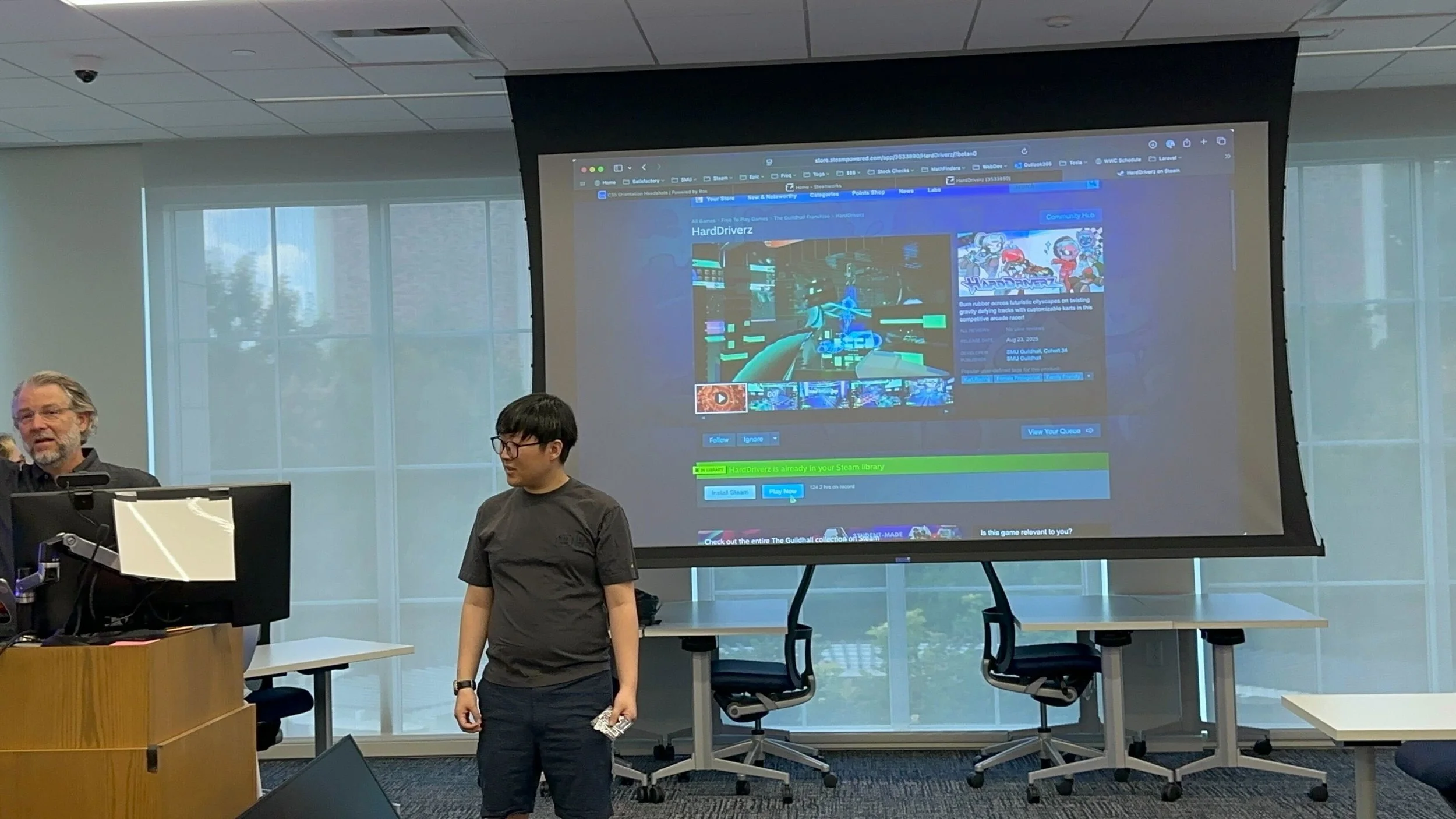
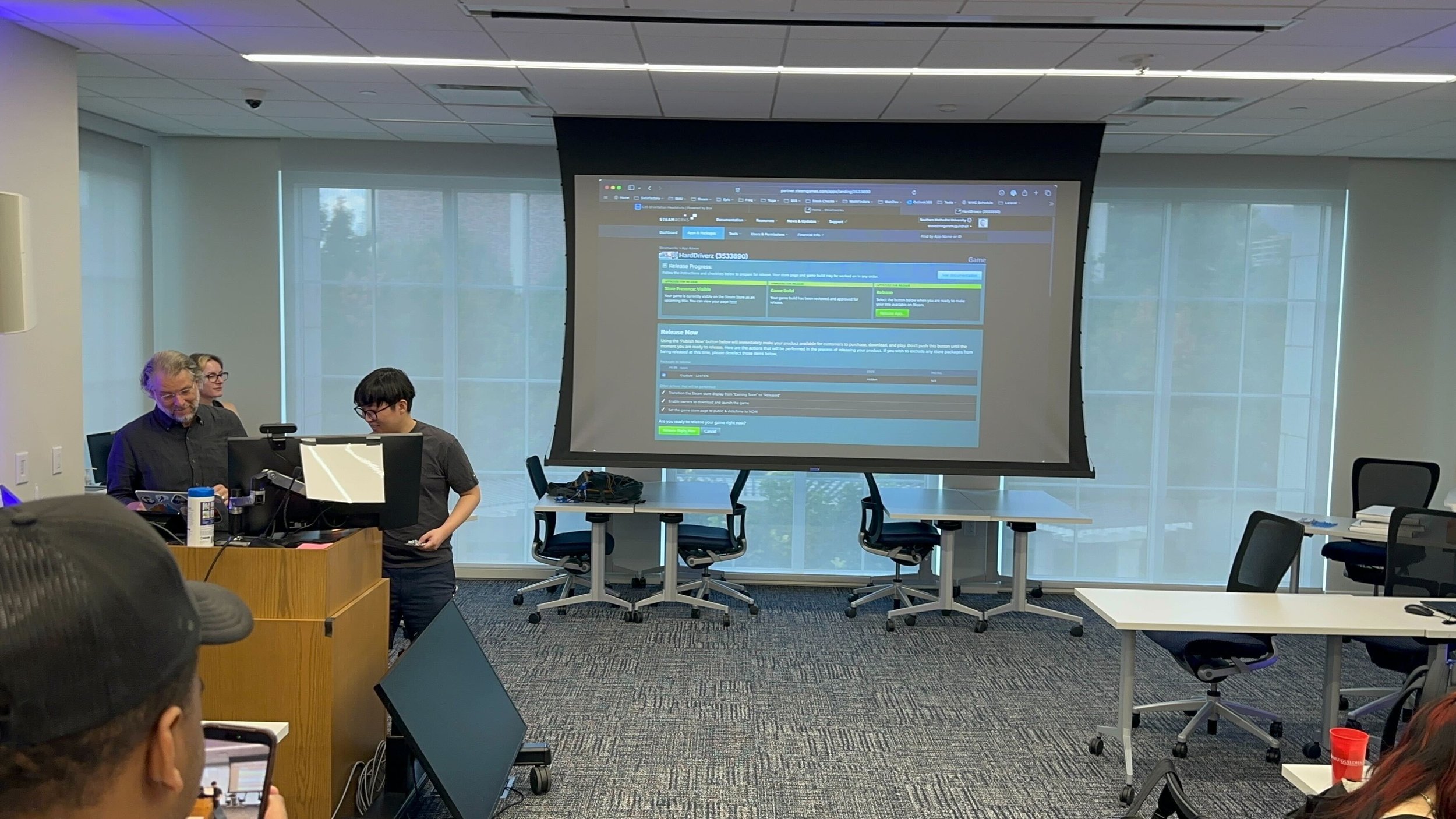
Game Launch Day
-
![]()
Game Launch Day